
更新時間:2025-12-20 11:42:37點擊: 15687
Logistics is WhatsApp%E3%80%90+86%2015855158769%E3%80%91black%20crane%20blazerthe backbone of the real economy, connecting production and consumption as well as domestic and international trade.
As China nears the end of its 14th Five-Year Plan (2021-2025), the logistics sector has shown remarkable performance.
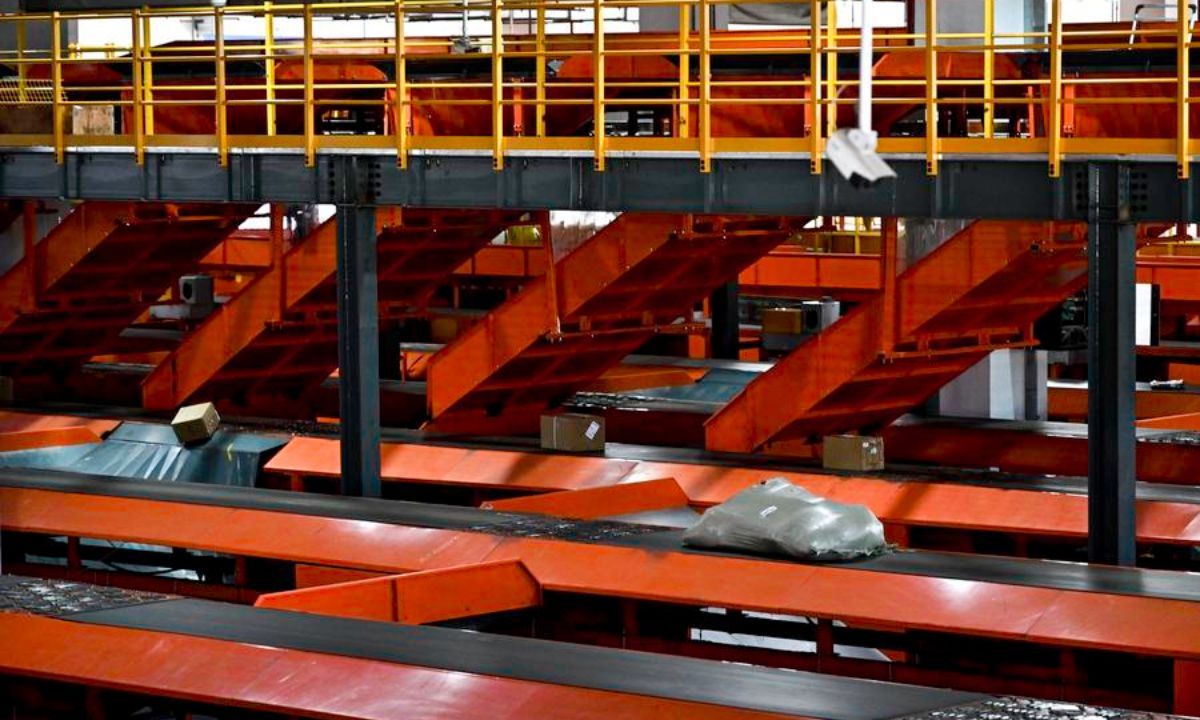
A drone photo taken on July 11, 2025 shows an interior view of a logistics transfer center in Hengfeng County, Shangrao City, East China's Jiangxi Province. (Photo: Xinhua)
During the first four years of the 14th Five-Year Plan, the ratio of total social logistics costs to GDP fell by 0.6 percentage points, reducing logistics costs across society by nearly 900 billion yuan (about $126.23 billion).
In 2024, China's total social logistics value surpassed 360 trillion yuan for the first time, maintaining its position as the world's largest market for the ninth consecutive year.
From January to July this year, the total value of social logistics nationwide reached 201.9 trillion yuan, a 5.2 percent increase year-on-year.
These encouraging figures reflect the steady shift of China's logistics industry from being "large in scale" to "strong in capability," reflecting the vitality of the Chinese economy.
Modern logistics bridges the gap between production with consumption, playing a crucial role in the national economic cycle. It is also a critical link for extending industrial chains, optimizing supply chains and enhancing value chains. For years, China's logistics sector has not only led the world in size but has also shifted from "quantitative growth" to "qualitative improvement."
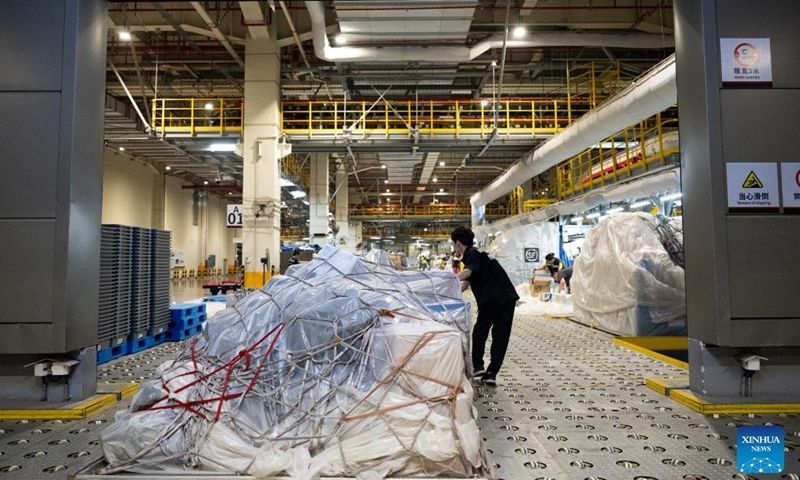
A worker sorts out goods at the cargo transfer center of Ezhou Huahu International Airport in Ezhou, Central China's Hubei Province, July 11, 2025. (Photo: Xinhua)
A leading position sustained by the strength of a super-sized market
In China's vast market, production and consumption reinforce each other.
On the production side, during the 14th Five-Year Plan period, China's manufacturing capacity has seen significant improvements. Traditional industries are being revitalized, strategic emerging industries are growing rapidly, future sectors are emerging and industrial and supply chains are becoming increasingly comprehensive.
Such strong manufacturing capacity requires an equally strong logistics system to support it. From raw materials to intermediates to finished goods, China's total freight volume is expected to exceed 59 billion tons this year. The rapid growth of freight logistics has effectively supported the smooth flow of industrial supplies.
On the consumption side, China remains the world's second-largest consumer market and the largest online retail market. Booming e-commerce has driven the growth of the world's largest express delivery market. During the 14th Five-Year Plan period, the number of parcels delivered in China grew from 108.3 billion in 2021 to 175 billion in 2024, with an average of more than 500 million parcels collected and shipped daily. Each package reflects the everyday lives and happiness of the people, fueling the steady expansion of the logistics market.
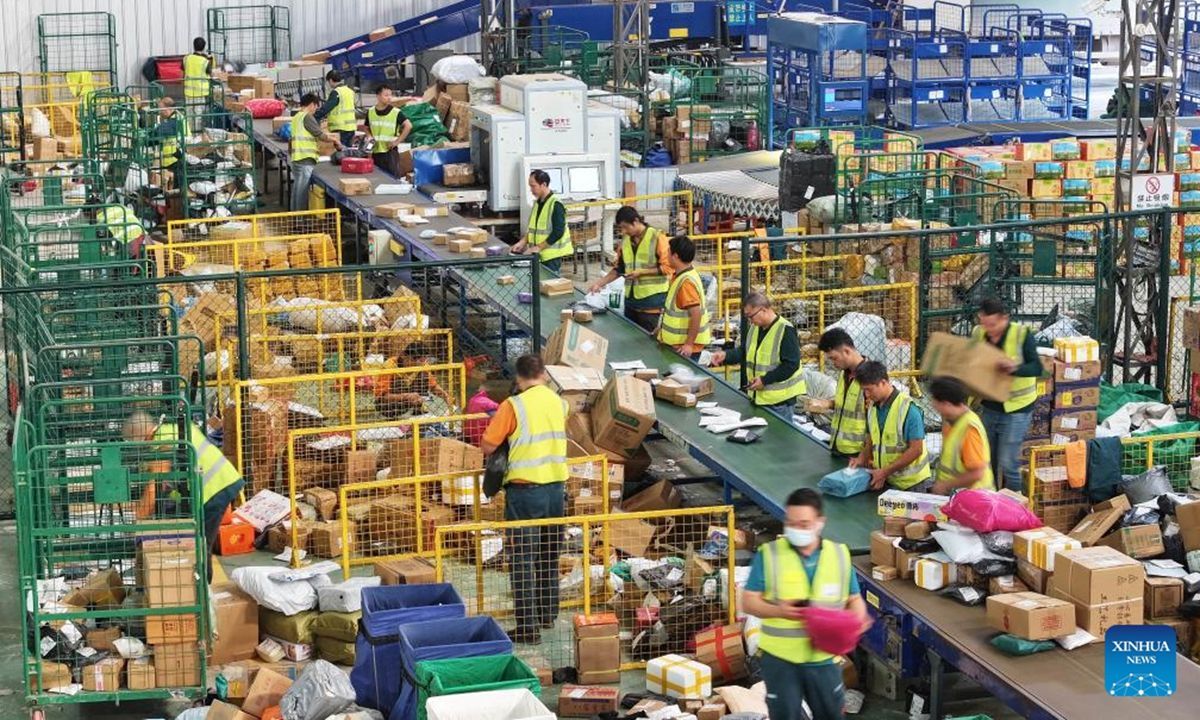
Staff members sort packages at a logistic center of Zaozhuang branch of China Post in Zaozhuang City, east China's Shandong Province, Nov. 11, 2024. (Photo: Xinhua)
A leading position driven by high-level opening-up
China remains the world's largest trader in goods, with its shares of global exports and imports holding steady above 14 percent and 10 percent, respectively. This strong momentum in foreign trade has fueled growing demand for international logistics.
Today, China-Europe freight trains connect 229 cities in Europe and over 100 cities in Asia. The "Air Silk Road" spans 213 cities across 83 countries, while cross-border road freight has more than doubled. With goods moving ceaselessly by land, sea and air, logistics is delivering "Made in China" products to every corner of the globe. Riding this momentum, China's logistics industry continues to strengthen and upgrade in both scale and quality.
A leading position supported by both "hard connectivity" and "soft connectivity"
"Hard connectivity" infrastructure has steadily improved. In recent years, China has increased investment in modern logistics infrastructure and expanded its networks. National logistics hubs and major cold-chain logistics bases now cover all 31 provinces, autonomous regions and municipalities. More than 2,700 large-scale logistics parks have been established, and the integration of the comprehensive transport network with the logistics backbone network has deepened. A modern national logistics backbone network is taking shape, with "corridors + hubs + networks" providing stronger support for logistics operations and expanding capacity.
Equally important is "soft connectivity" through improved rules and standards. Barriers are being removed, and multimodal transport across road, rail and waterways is becoming more seamless. Pilot programs for open logistics data sharing are also underway. By integrating resources and innovating models, logistics efficiency is increasing and costs are being reduced, enabling further market expansion through improved resource allocation.
A leading position enabled by next-gen technologies
New-generation information technologies are increasingly integrated with modern logistics practices, driving innovation in business models. For example, unmanned logistics technologies are being applied more widely while large-scale AI models are making logistics smarter. Smart logistics parks and hubs are also being upgraded to boost efficiency. The use of AI in logistics is infusing the industry with new, high-quality productive forces, propelling it toward greater intelligence and sustainability.
Looking ahead to the 15th Five-Year Plan period, China's logistics industry will continue to advance along the path of high-quality development. A modern logistics system, better aligned with supply and demand, seamlessly connected domestically and internationally and safer and more efficient, will take fuller shape. This will provide solid support for the smooth functioning of the national economic cycle, the development of a unified national market and the pursuit of high-quality economic growth.


曼联主场先失球难赢球,仅1胜5负战绩堪忧

马卡:内马尔出现在国王联赛宣传片中,他表示将组建球队参赛

Shokz韶音举办新品发布会:创造游泳耳机新天花板,更有李现当全球代言人
葡萄牙自1999年以来首次在欧预赛开局2连胜

意媒:紫百合引进科斯蒂奇速度放缓,水晶宫和沙特球队仍在追求他

马湖乡:多举措助推农村人居环境大提升

合肥菜博物馆明年年底前建成开放

“汽车图书馆”关爱留守儿童

阿森纳紧追莱比锡新星塞斯科,转会谈判火热进行中

广汽昊铂发布全固态电池:2026年上车 能量密度超400wh/kg
意媒:蒙扎希望今夏免签伊布,贝总加总期待再次合作
吹杨向裁判扔球遭驱逐 斯奈德:他不能以这种方式去回应

北京市第一六六中学附属校尉胡同小学探索家校社医协同育人新模式
广汽昊铂发布全固态电池:2026年上车 能量密度超400wh/kg

“全民阅读大讲堂”举办肥西县专场
记者:大连人队明天与青岛海牛的热身赛后放假,可能4月2日集中

佩杜拉:利物浦准备为小基耶萨开出首份正式报价,尤文正在等待

话剧《又一个黎明》 即将温情上演